
Adaptive Reuse: Miami's Strategic Imperative for Commercial Development
As Miami's developable land dwindles and construction costs escalate, adaptive reuse has moved beyond mere preservation to become a critical strategy for unlocking premium commercial value. This approach demands sophisticated capital deployment and navigation of complex regulatory landscapes, but delivers unique, high-yield assets in a market hungry for differentiated spaces.
Adaptive reuse is no longer a niche strategy for Miami developers; it is rapidly becoming an imperative in a market defined by escalating land values, prohibitive new construction costs, and a finite supply of prime developable parcels. For commercial real estate operators and investors, transforming existing structures, particularly those with historic significance, offers a differentiated pathway to market entry and asset appreciation, provided they can skillfully navigate the inherent complexities.
The Wynwood Effect: A Blueprint for Value Creation
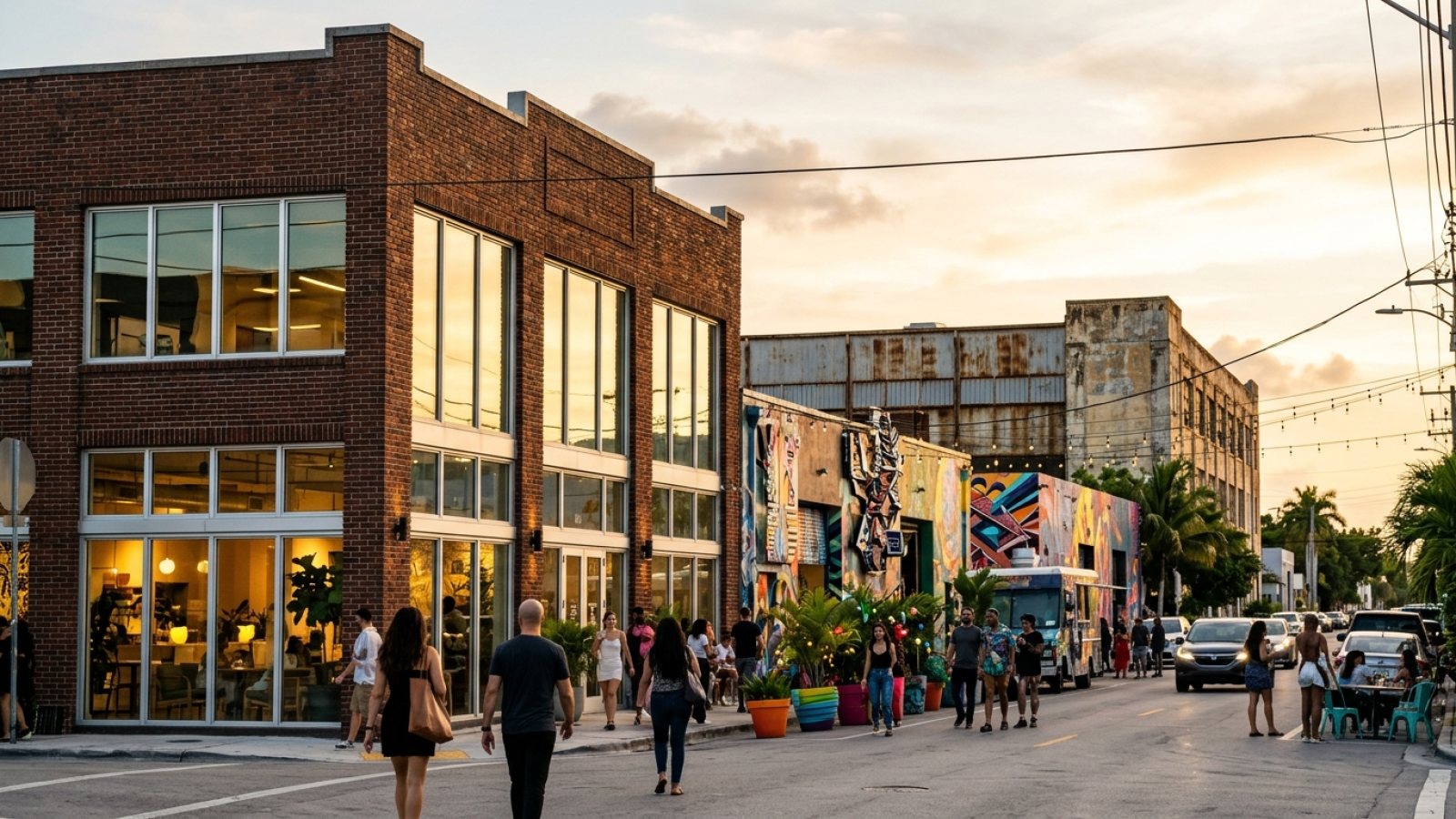
No submarket exemplifies the power of adaptive reuse better than Wynwood. What were once low-slung industrial warehouses, many dating back to the 1920s and 30s, have been meticulously reimagined as Class A creative office space, high-end retail, and hospitality venues. This transformation didn't just preserve a neighborhood's character; it fundamentally reshaped its economic profile.
Consider the market shift: in the early 2010s, these industrial properties commanded rents in the low $20s per square foot NNN. Today, prime creative office space in Wynwood fetches rents ranging from $70-$90/SF NNN, often competitive with or exceeding Class A rates in parts of Brickell for tenants seeking a unique, experiential environment. Retail rents on key corridors like NW 2nd Avenue regularly see $100-$150/SF NNN, a premium driven by the district's curated vibe and pedestrian traffic. This isn't merely a function of aesthetic appeal; it's a testament to the premium that discerning tenants, from tech startups to luxury brands, are willing to pay for spaces that offer character, authenticity, and a distinct brand identity.
The Design District offers another powerful illustration, albeit with a different trajectory, where older light industrial and commercial buildings were repurposed into flagship luxury retail outlets and showrooms. Developers here understood that the existing low-rise fabric, once a constraint, could become a unique asset for brands seeking a curated, walkable luxury campus distinct from traditional mall environments.
Navigating the Financial and Regulatory Maze
While the rewards of adaptive reuse are substantial, the pathway is fraught with financial and regulatory hurdles. Initial per-square-foot development costs often exceed those of new construction due to unforeseen structural issues, environmental remediation (e.g., asbestos, lead paint), and the specialized labor required for historic preservation.
However, sophisticated developers leverage a complex capital stack to de-risk these projects. Federal and state historic tax credits, façade easements, and local incentive programs (such as the City of Miami's Historic Preservation Ad Valorem Tax Exemption) can significantly offset these upfront expenditures. Navigating these incentives requires expert legal and financial counsel, often involving syndication of tax credits. Furthermore, the permitting process with bodies like the City of Miami Historic and Environmental Preservation Board demands meticulous planning, deep understanding of preservation guidelines, and often extended timelines compared to a standard new-build. Project timelines can easily stretch, impacting IRR if not accurately forecast.
Beyond Retail: New Frontiers and Strategic Imperatives
Looking ahead, adaptive reuse will extend its reach across diverse asset classes and submarkets. The demand for unique hospitality experiences in areas like Little Havana presents opportunities to convert older commercial buildings into boutique hotels or culinary destinations, tapping into both tourist and local markets for authentic cultural engagement. These projects demand a delicate balance of preservation and modernization, often involving community engagement to ensure authentic integration.
Even the industrial sector, particularly in areas adjacent to Port Miami or Doral, could see older, less efficient warehouses repurposed for last-mile logistics facilities that prioritize strategic urban access over sheer scale. While less about historic preservation, it speaks to the broader principle of maximizing existing infrastructure.
In conclusion, adaptive reuse is a sophisticated, capital-intensive, yet ultimately high-value strategy for Miami's commercial real estate market. It addresses the fundamental challenges of scarcity and rising costs, while simultaneously delivering unique tenant appeal and robust returns for patient, informed investors. For those equipped to navigate its complexities, transforming Miami's past into its commercial future is not merely a trend, but a strategic imperative that defines the next cycle of development.
