
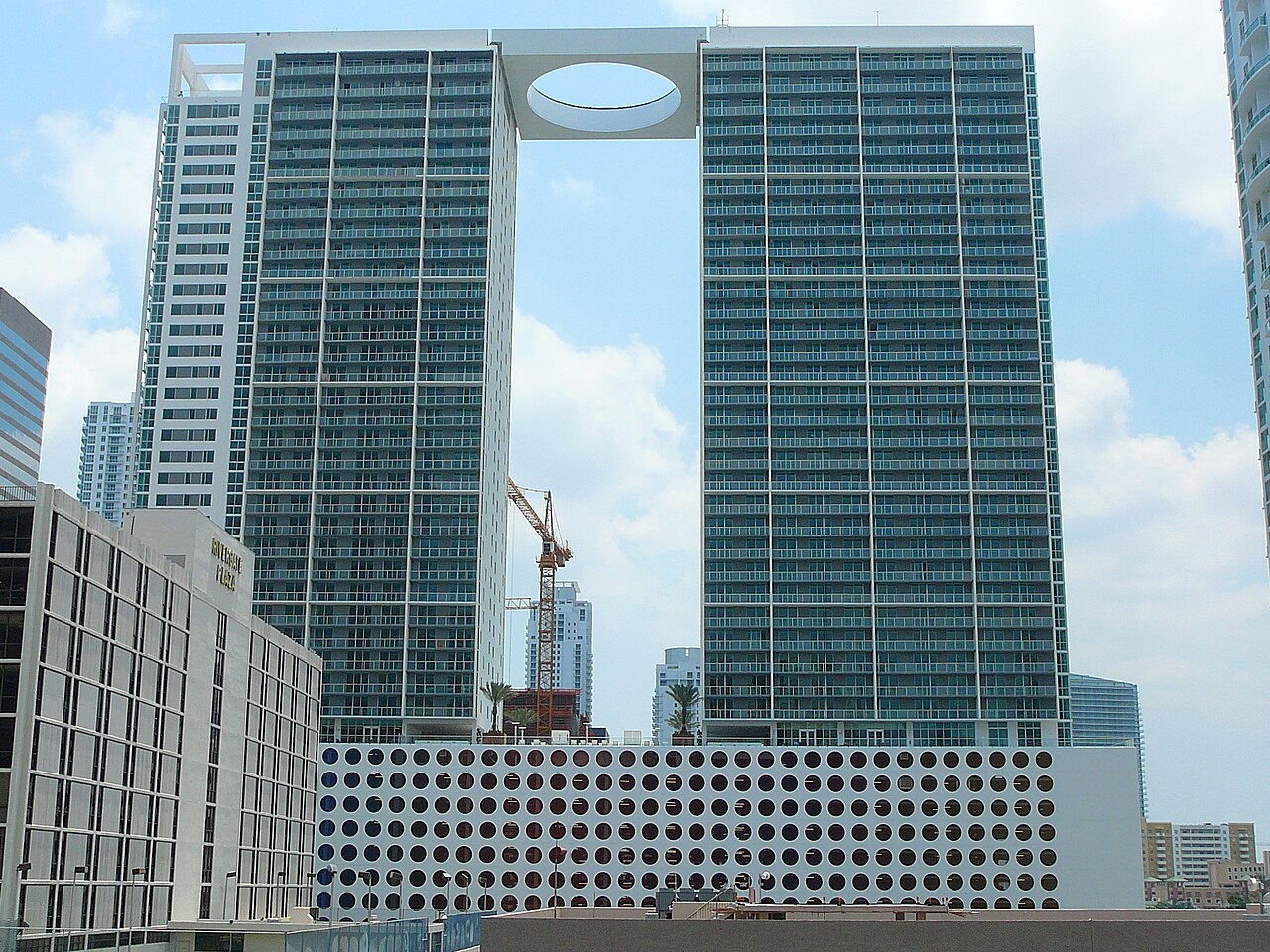
Brickell's Multifamily Market: Dissecting True Tenant Outlays
Understanding the Brickell rental market requires looking beyond advertised rents; aggressive concessions and an array of fees significantly alter the effective monthly cost for tenants. For investors and operators, accurately assessing absorption and revenue necessitates a deeper dive into these actual outlays.
The advertised rental rate for a Class A apartment in Brickell rarely reflects the true monthly payment a tenant is making. For operators, investors, and anyone tracking Miami's multifamily sector, understanding the gap between pro forma assumptions and effective rents is critical to accurately gauge market performance, absorption rates, and asset value. The current Brickell landscape, characterized by robust new deliveries and a competitive leasing environment, necessitates a granular look at what tenants are actually paying.
The Pervasive Role of Concessions
Developers and property managers in Brickell's high-end multifamily market have largely opted to maintain strong face rates while offering significant concessions to drive lease-up. While headline rents for new Class A product might hover between $3.75 and $4.75 per square foot, these numbers often mask a strategic discount. The most common concession involves one to two months of free rent on a 13 to 15-month lease term, effectively reducing the monthly average. For example, a unit advertised at $4,000 per month with two months free on a 14-month lease brings the effective monthly payment down to approximately $3,428 – an immediate 14.3% discount from the listed price.
Beyond free rent, other incentives are frequently deployed: waived application fees, reduced security deposits, complimentary parking for a period, or even credits towards moving expenses. These tactics allow properties to report higher average in-place rents, which can be advantageous for valuations and refinancing, even as cash flow reflects the discounted reality. For a new development aiming to hit specific occupancy thresholds rapidly, these concessions are a primary tool, directly impacting the net effective rent (NER) that truly matters for financial modeling.
Beyond Base Rent: Operational Costs and Hidden Fees
The effective rent calculation doesn't stop at concessions; a myriad of additional charges are consistently layered onto the tenant's monthly statement. These operational costs and ancillary fees significantly inflate the actual cash outlay and are a key component of a property's ancillary income streams. Common charges include:
- Parking: Often not included in the base rent, adding $150 to $275 per month per space. Given Brickell's density, this is rarely optional.
- Amenity Fees: Many new towers charge a mandatory monthly amenity fee, covering access to pools, gyms, co-working spaces, and concierge services. These can range from $50 to $150 per month.
- Utility Pass-Throughs: While electricity is typically billed separately, common area utilities, trash collection, pest control, and sometimes a technology package (basic internet/cable) are often passed through to tenants as a flat fee or prorated charge, adding another $40 to $100 per month.
- Pet Fees/Rent: For the significant portion of residents with pets, a non-refundable pet fee (often $500+) and recurring pet rent ($50-$100 per month per pet) are standard.
When factoring these non-negotiable costs, a tenant paying an effective $3,428/month for a one-bedroom unit could easily see their total monthly outlay approach $3,800 to $4,200, representing a substantial uplift from the headline rent and even the concession-adjusted effective rate. For a Class A unit, a studio's true cost can range from $2,700-$3,500, a one-bedroom from $3,500-$4,800, and a two-bedroom upwards of $5,500-$8,000+ once all these factors are aggregated.
Market Dynamics and Future Outlook
Brickell's appeal as a live-work-play destination, coupled with significant corporate relocations to Miami, continues to drive demand. However, the sheer volume of new luxury multifamily inventory delivered over the past 24 months, with more in the pipeline for late 2026 and early 2027, sustains a competitive environment. This supply-demand dynamic is precisely what empowers concessions and necessitates these additional fees to maximize revenue per occupied unit. Vacancy rates in Brickell's Class A multifamily have been trending in the 8-10% range, a level that prevents landlords from pulling back on incentives without risking absorption slowdowns.
For investors, this means underwriting assumptions must be rigorously tested against the reality of net effective rents, not just pro forma rates. For operators, it underscores the need for creative leasing strategies that balance occupancy targets with revenue optimization. Understanding the true cost for a tenant provides the most accurate lens through which to view the health and sustainability of Brickell's dynamic, high-rise rental market.
