Coral Gables Office Market: Rents, Tenants, and the Enduring Demand for Suburban Sophistication
Coral Gables continues to carve out a distinct niche within South Florida's competitive office landscape, commanding premium rents by catering to a specific echelon of professional services and Latin American capital. This market’s appeal lies not in its density, but in its strategic blend of prestige, connectivity, and refined urban amenities.
While Brickell’s verticality often dominates the conversation surrounding Miami’s office market, Coral Gables quietly maintains its position as a highly sought-after, albeit distinct, submarket. The Gables isn't chasing the same tenant profile as Wynwood's creative class or downtown's institutional giants; instead, it offers a compelling value proposition centered on prestige, convenience, and a decidedly sophisticated suburban feel that continues to command top-tier rents.
The Price of Prestige: Rents and Vacancy Dynamics
As of late 2026, Class A asking rents in Coral Gables continue their upward trajectory, typically ranging from $70 to $85 per square foot, full service. Trophy assets, particularly those with new construction or significant renovations like The Plaza Coral Gables or Gables Station, routinely push into the mid-$90s/SF. This places the Gables firmly in line with, and sometimes exceeding, pockets of Brickell for certain tenant classes, a testament to its unique pull. The overall Class A vacancy rate hovers around 7.5%—a healthy figure demonstrating robust demand against a backdrop of limited, strategic new supply. Absorption has been steady, driven by internal market expansions and a consistent flow of inbound capital.
Class B product, while still offering a strong value proposition, sees asking rents between $50 and $65 per square foot, creating a clear stratification that allows for a wider array of businesses to consider the submarket. The scarcity of large blocks of available space, particularly contiguous floors exceeding 20,000 square feet, signals a mature market with high tenant retention and deliberate growth, rather than speculative development. This often translates to longer lease terms and less aggressive tenant improvement allowances compared to submarkets with higher vacancy or a pipeline of speculative deliveries.
Who's Calling Coral Gables Home? The Tenant Profile
The tenant roster in Coral Gables underscores its identity. Law firms, wealth management advisors, private equity groups, and family offices constitute the bedrock of the market. These are firms prioritizing a polished address, easy client access, and an environment that reflects stability and discretion. Large, international consulting firms and regional headquarters for financial institutions also maintain a significant presence, valuing the Gables' blend of accessibility for executives residing in affluent South Miami-Dade communities and its direct connection to Miami International Airport.
Crucially, Coral Gables remains a primary landing strip for Latin American capital. Businesses and high-net-worth individuals from Brazil, Colombia, Mexico, and Argentina frequently establish their U.S. footholds here. These tenants are often drawn by the cultural familiarity, the robust network of bi-lingual professional services, and the perceived stability and security of the jurisdiction. Unlike some other submarkets, the Gables offers a more understated, yet undeniably affluent, setting for these international operations, which often prefer to avoid the higher-profile bustle of Brickell or the emerging creative scene of Wynwood.
Healthcare administration and specialized medical practices also form a significant component, particularly those tied to executive operations rather than high-volume patient services. The area's demographics—an aging, affluent population—support this, as do the strong regional healthcare systems maintaining executive offices here.
The Enduring Appeal of Suburban Sophistication
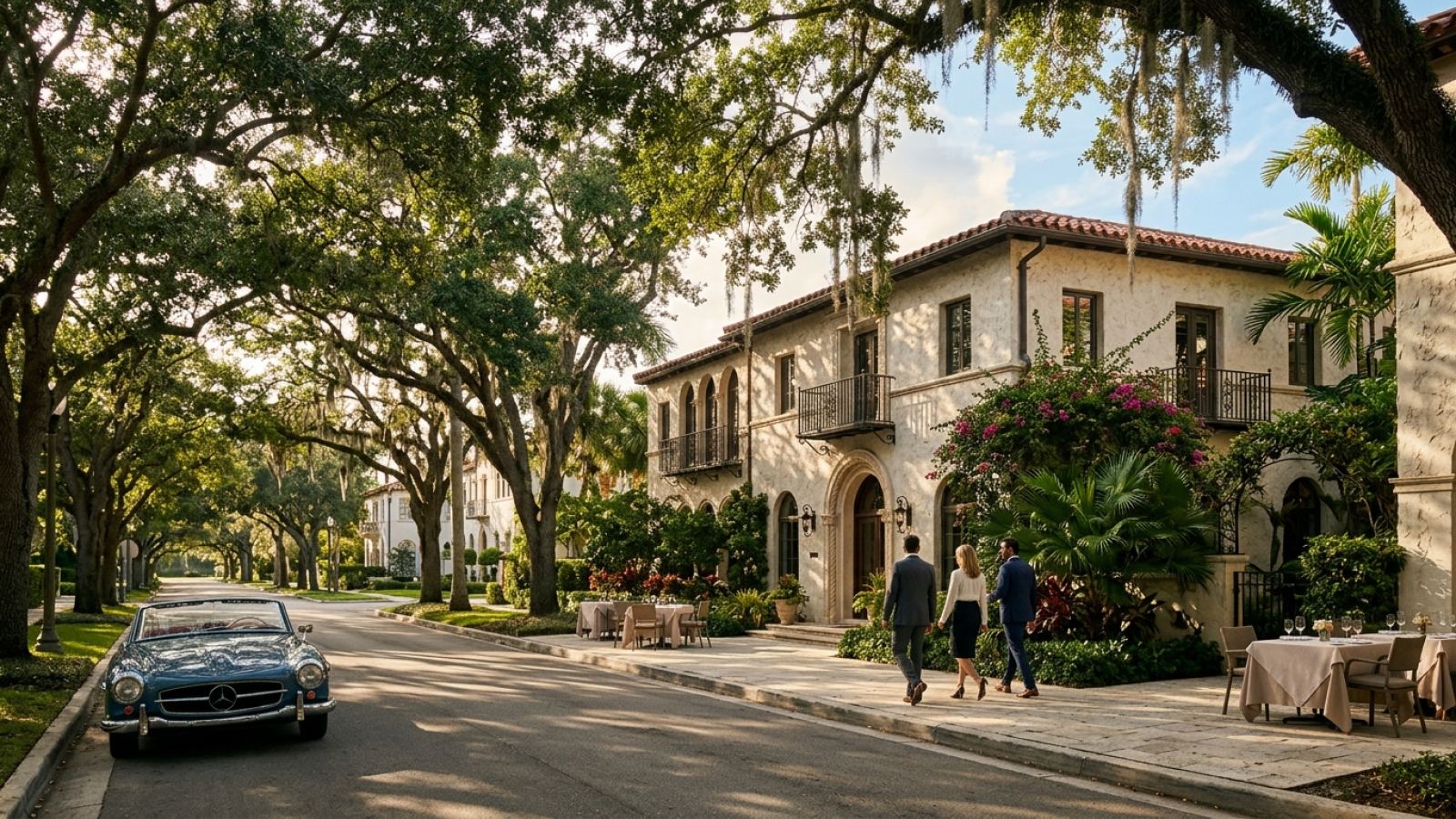
Beyond the raw numbers, Coral Gables’ enduring appeal lies in its meticulously planned urban fabric. The city's tree-lined boulevards, Mediterranean Revival architecture, and meticulously maintained public spaces create an atmosphere distinct from any other South Florida submarket. It’s a walkable, amenity-rich environment that blends office with high-end retail and dining — from the luxury boutiques at Merrick Park to the diverse culinary offerings along Miracle Mile and Ponce de Leon Boulevard. This ecosystem fosters an elevated work-life integration that is highly valued by both executives and employees.
The appeal isn't just aesthetic; it’s logistical. For senior executives and professionals living in Coral Gables, South Miami, Pinecrest, or Coconut Grove, the commute is often minimal, reducing the daily grind associated with denser urban cores. The relative ease of access, combined with a strong sense of community and top-rated public and private schools nearby, reinforces the Gables' position as a preferred location for established businesses and their talent.
While infrastructure challenges like traffic congestion remain a factor, ongoing efforts to improve transit options and pedestrian connectivity are being pursued. The deliberate integration of office with residential and retail in developments like The Plaza Coral Gables is a prime example of how the market is evolving to enhance this "sophisticated suburban" experience, creating self-contained micro-districts that minimize the need for vehicular travel.
Outlook: Stability and Strategic Growth
Coral Gables is not a market defined by explosive growth, but by stability, quality, and a deeply embedded sense of corporate identity. Its ability to consistently command premium rents and maintain low vacancy rates, even amidst broader market fluctuations, speaks to the unique demand it satisfies. For investors, it represents a resilient asset class with predictable income streams, bolstered by a tenant base that values long-term presence over transient trends. For businesses, it offers a strategic address that confers credibility and provides access to a highly desirable talent pool within an unparalleled working environment. The demand for this particular blend of suburban sophistication is not only enduring but appears poised to strengthen as Miami continues to mature as a global business hub.
