Doral's Diverse Economy: Beyond Logistics, What's Driving Corporate Growth and Investment
Doral, long synonymous with South Florida's logistics backbone, is rapidly diversifying its economic core, attracting significant corporate growth and investment far beyond its industrial roots. This shift is reshaping its commercial real estate landscape, pushing vacancy rates and rental yields in unexpected directions.
Doral's economic narrative is expanding beyond its well-established dominance in warehousing, distribution, and freight forwarding; the city is now a magnet for diversified corporate tenants and investors leveraging its strategic location and evolving infrastructure. While its proximity to Port Miami and Miami International Airport (MIA) remains a fundamental asset, Doral’s growth drivers today are increasingly found in Class A office, specialized healthcare, and robust retail sectors, fueled by both domestic expansion and consistent Latin American capital influx.
For years, Doral's industrial market commanded attention, boasting sub-3% vacancy rates and some of South Florida's highest lease rates for Class A logistics facilities, often exceeding $20/SF NNN for modern tilt-wall construction. However, the commercial office market, once an afterthought compared to Brickell or Downtown, has matured dramatically. Corporate relocations and expansions, particularly from the financial services, media, and tech sectors, have buoyed demand. Companies like Univision and Telemundo already anchor significant presences, but a new wave of regional HQs and shared service centers are drawn to Doral's comparatively lower occupancy costs—Class A office rents here typically range from $50-60/SF full-service—and an increasingly sophisticated amenity base in developments like Downtown Doral.
The Maturation of Office and Medical Office
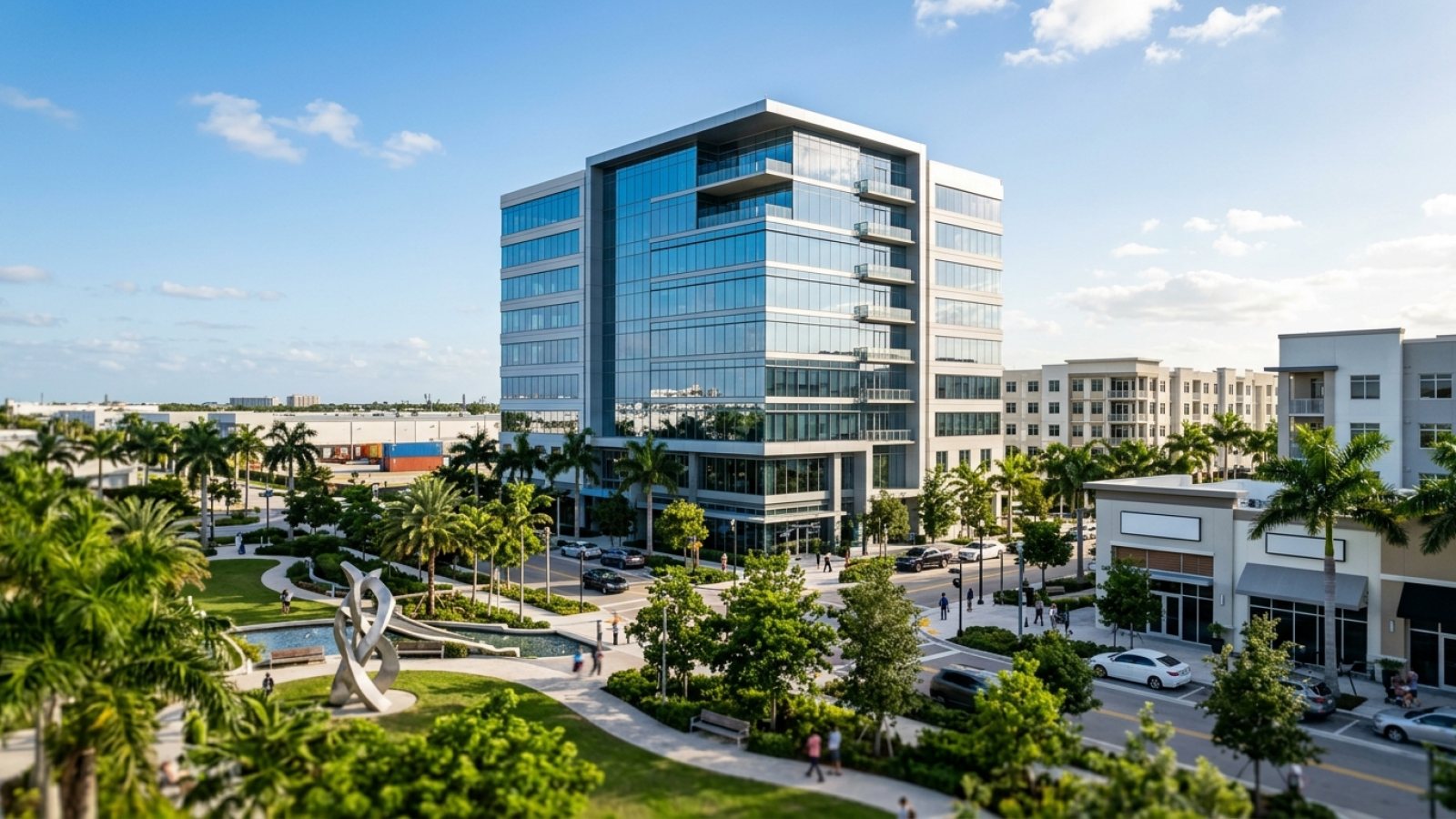
Doral's office market is no longer just a spillover from Miami's core; it’s a distinct destination. The current office vacancy rate, hovering around 12% across all classes, masks strong performance in new or recently renovated Class A buildings, which often see quicker absorption and higher effective rents. This demand isn't speculative; it's driven by a robust talent pool, including a significant bilingual workforce, and superior connectivity via the Palmetto Expressway (SR 826) and Florida’s Turnpike. The medical office sector, in particular, has seen substantial growth. With Hialeah and Kendall bordering Doral, and a burgeoning affluent residential population, healthcare providers are strategically expanding. New medical facilities and specialized clinics are driving demand for purpose-built or retrofitted office space, often trading at premium cap rates given the stability of healthcare tenants and their typically longer lease terms. This healthcare-driven real estate activity provides a counter-cyclical hedge and diversifies Doral’s tenant base beyond traditional corporate and logistics players.
Retail and Hospitality: A Function of Residential Density
The influx of corporations and a growing professional class has, in turn, fueled Doral's retail and hospitality sectors. While not the luxury market of the Design District, Doral's retail scene caters to daily needs, lifestyle, and a strong restaurant culture. The success of mixed-use projects such as Downtown Doral is predicated on a critical mass of residents and office workers living, working, and spending within walking distance. This 'live-work-play' dynamic is critical to understanding Doral's appeal to institutional investors now entering the retail and multifamily space. Multifamily occupancy rates consistently remain in the low 90s, supporting strong demand for everything from fast-casual dining to upscale eateries. The underlying value proposition for retail space in Doral isn't just traffic counts; it's the demographic quality and disposable income of the surrounding population, which includes a substantial segment of high-net-worth Latin American residents and ex-pats.
Latin American Capital and Future Trajectories
Doral's position as a gateway for Latin American capital is arguably more pronounced here than in many other South Florida submarkets. Investors from Colombia, Venezuela, and Argentina, among others, consistently look to Doral for stable commercial and residential opportunities. This capital flows into everything from individual condo units to significant acquisitions of income-producing properties, recognizing Doral’s stability, governance, and sustained growth prospects. This consistent investment, insulated somewhat from domestic economic cycles, provides a robust underpinning for Doral’s real estate values. While affordability and infrastructure pressures, particularly traffic congestion, remain real challenges, Doral’s proactive city planning, strategic location, and increasingly diverse economic base position it for continued corporate growth and investment. The market's resilience is not just about logistics anymore; it’s about a comprehensive ecosystem where businesses, residents, and capital find fertile ground.
