
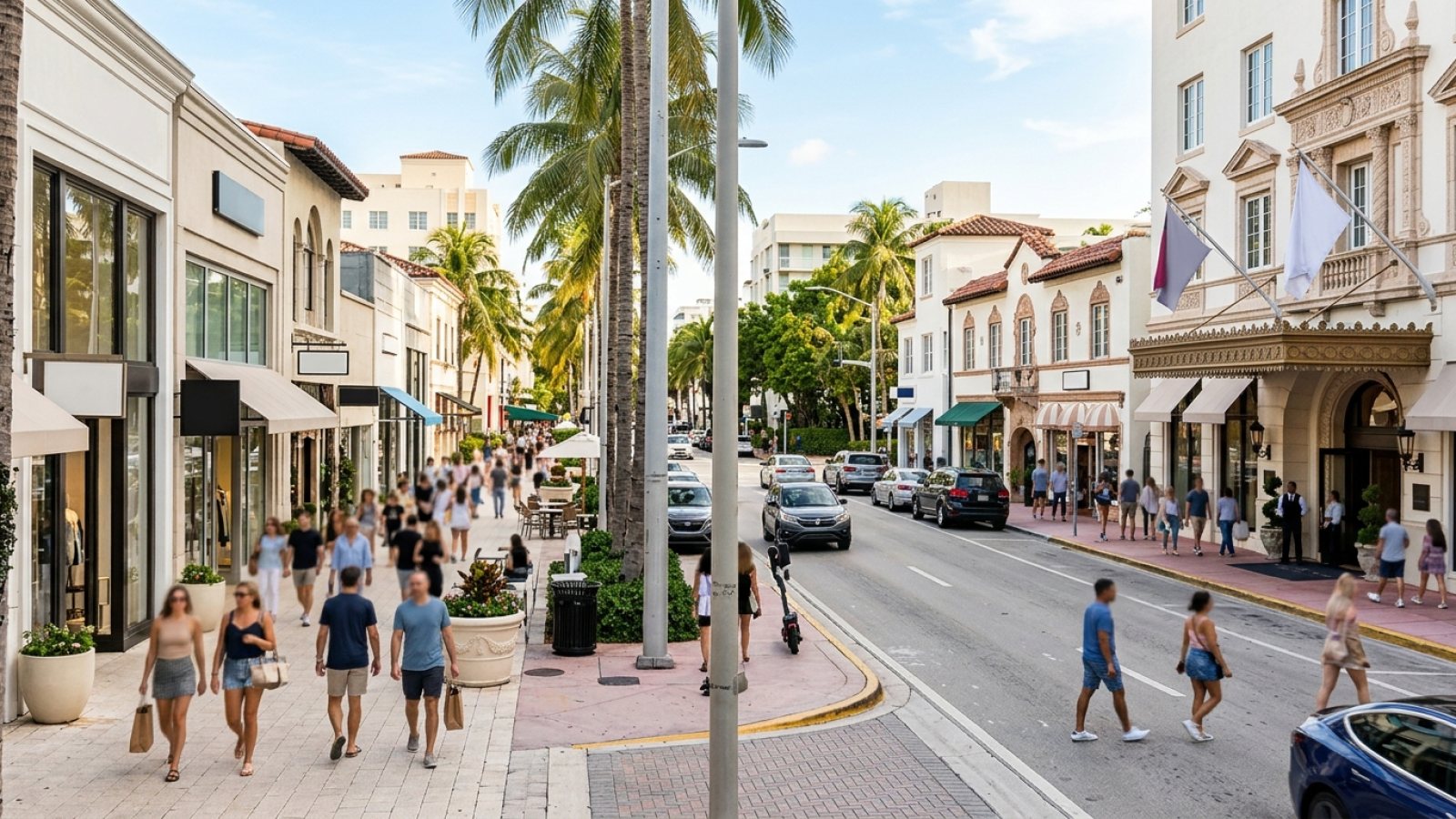
Miami Beach Retail: Beyond Lincoln Road's Marquee, What's Driving Tenant Strategy
Miami Beach's retail landscape is undergoing a nuanced recalibration, with tenant strategies diverging significantly between established draws like Lincoln Road and the re-emerging energy of Washington Avenue. Understanding these distinct playbooks is crucial for investors and operators navigating the island's evolving commercial real estate.
Miami Beach's retail real estate market, once singularly defined by Lincoln Road's foot traffic and global brands, is now a study in bifurcation, with tenant acquisition and valuation metrics diverging sharply across its primary commercial corridors. As of Q4 2026, the island presents two distinct investment and operational theses: the established, high-street model of Lincoln Road and the revitalized, hospitality-driven momentum along Washington Avenue.
Lincoln Road: The Enduring High Street, Re-engineered
Lincoln Road remains a non-negotiable address for certain national and international brands seeking unparalleled visibility and consistent tourist traffic. Despite a period of elevated vacancies in the mid-2010s, the corridor has stabilized, commanding prime rents that can still breach the high-$200s to low-$300s per square foot NNN for prime block frontage. Tenants here are often either flagship luxury (e.g., Apple, Tesla), aspirational lifestyle (e.g., Aerie, Athleta), or high-performing experiential concepts that can absorb the significant occupancy costs and common area maintenance (CAM) charges.
What tenants are targeting Lincoln Road now is a more discerning mix. The mass-market apparel operators of yesteryear have largely ceded ground to brands prioritizing a curated experience, often leveraging their physical presence as a marketing touchpoint rather than solely a sales engine. Latin American capital, a consistent force in South Florida real estate, continues to underpin ownership stability on Lincoln, with investors valuing its long-term, trophy asset status. Lease terms typically extend to 10 years or more, reflecting the substantial tenant improvement (TI) packages required for these high-profile spaces. Vacancy rates have moderated to a healthier 8-10% range for the core blocks, indicating a more stable, albeit selective, leasing environment.
Washington Avenue: The Hospitality-Driven Resurgence
Shift south and west of Lincoln, and Washington Avenue tells a story of dramatic transformation. Once known for its transient hotel stock and nightlife, a significant wave of boutique hotel redevelopment, led by projects like the revitalized Celino South Beach and the upcoming W South Beach Residences, has fundamentally altered its retail tenant profile. Washington Avenue is no longer chasing the Lincoln Road model; its appeal lies in its more accessible rents and its direct connection to Miami Beach's evolving hospitality and culinary scene.
Here, the tenant target list looks decidedly different. Boutique F&B concepts, often chef-driven or unique, find a receptive audience among both tourists and locals drawn to new hotel developments. Lifestyle and wellness brands, pop-up concepts, and destination-oriented retail that complements the hotel experience are actively seeking spaces. Rent PSF NNN along Washington Avenue typically ranges from $70-$120, a significant discount to Lincoln Road, allowing for more diverse and independent operators. The value proposition is less about sheer foot traffic volume and more about curated customer engagement within a specific hospitality ecosystem. Developers are actively seeking tenants that enhance the guest experience, often offering competitive build-out allowances to attract the right fit.
The Intersection of Strategy: Why Submarket Matters
The divergent tenant strategies between Lincoln Road and Washington Avenue underscore a critical lesson for commercial real estate players in Miami Beach: a granular understanding of submarket identity is paramount. Lincoln Road tenants are buying into a global brand platform, demanding significant storefronts and high-volume exposure for established, often publicly traded entities. Conversely, Washington Avenue tenants are banking on the synergy with the area's burgeoning hotel and F&B scene, targeting a more localized or niche tourist demographic willing to explore beyond the primary thoroughfares.
For investors, this means a bifurcated risk-reward profile. Lincoln Road offers core-plus stability with established cap rates, while Washington Avenue represents a value-add or opportunistic play, banking on continued neighborhood revitalization and increasing foot traffic from its new hospitality anchors. Lease structures reflect this; Lincoln often demands longer, less flexible terms, whereas Washington may offer more agile deals to attract innovative concepts. However, Miami Beach is not immune to broader market pressures; challenges like escalating property insurance, the ongoing affordability crisis impacting retail and hospitality staffing, and the long-term implications of climate risk continue to shape investment decisions and tenant viability across both corridors. Successful operators understand that the market is mature enough to punish generalist approaches, demanding precise alignment of concept to corridor.
