Miami's Family Office Phenomenon: How UHNW Capital is Reshaping the City's Economic Foundation
Miami has solidified its position as a global magnet for ultra-high net worth individuals, but the deeper story lies in the institutionalization of this capital through family offices. These sophisticated entities are not merely buying trophy assets; they are fundamentally altering the city's commercial real estate landscape and broader economic fabric.
Miami is no longer just attracting ultra-high net worth (UHNW) individuals; it's attracting their institutionalized wealth management structures: the family office. This migration of sophisticated, patient capital is not a mere residential amenity play; it is fundamentally reshaping Miami's commercial real estate market and injecting a new, complex layer into its economic foundation, with implications far beyond luxury condominiums.
These are not just single-check investors. Family offices bring a long-term strategic outlook, often with a mandate for direct investment, venture capital, and multi-generational asset allocation. Their arrival in South Florida, particularly accelerating since 2020, has moved beyond opportunistic real estate acquisitions to deep engagement in diverse sectors, demanding a re-evaluation of Miami's capital flows.
The Brickellization of Institutional Wealth
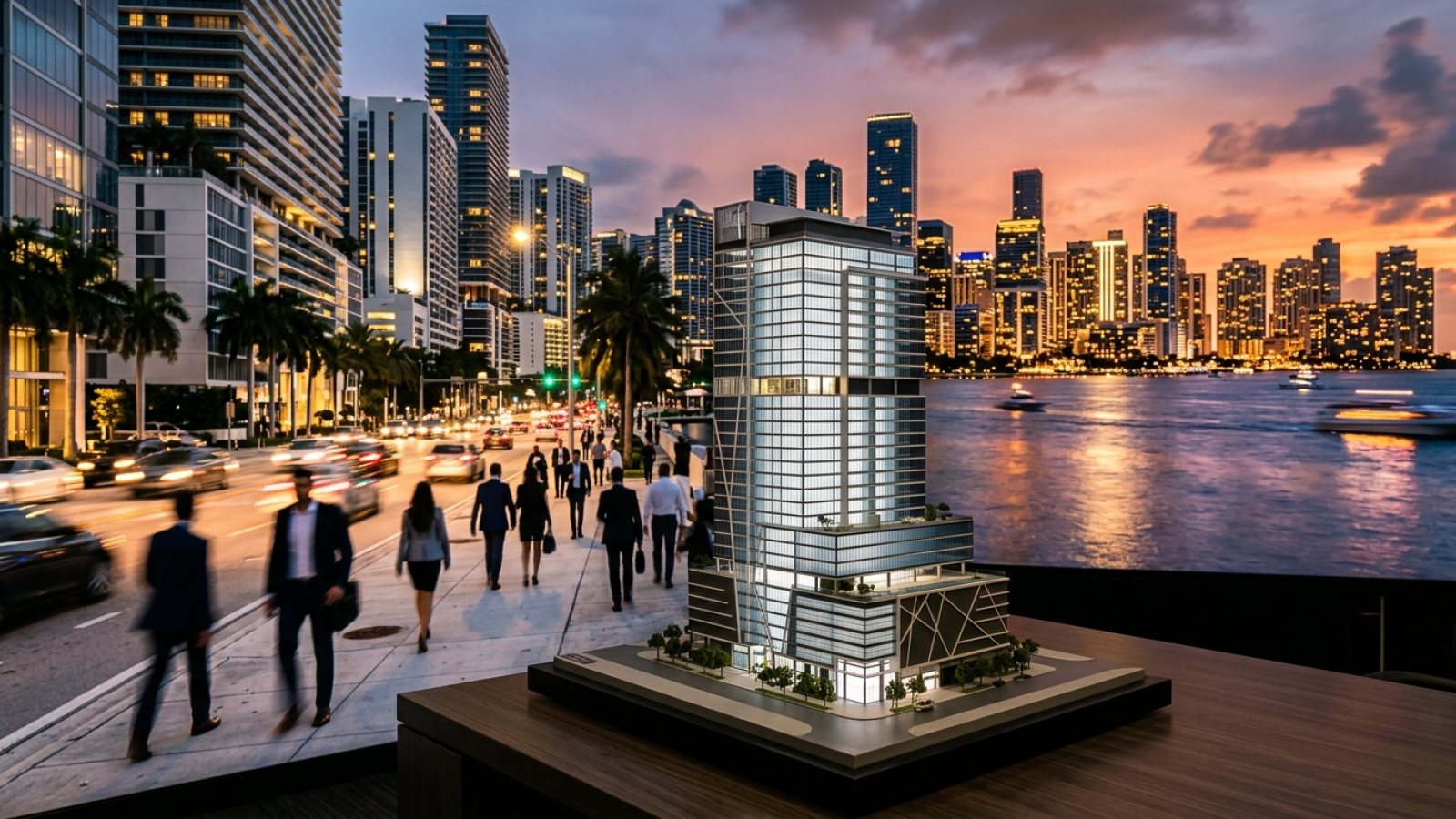
Brickell has unequivocally become the gravitational center for this financial influx. The demand from family offices for Class A office space, often requiring smaller, bespoke footprints for their lean teams, has been a significant driver of rent growth and compressed vacancy rates. Buildings like 830 Brickell have seen pre-leasing activity dominated by financial services tenants, including a notable contingent of newly established or relocated family offices. While direct lease terms vary, the presence of these entities supports a premium, often seeing rates north of $100/SF for top-tier space, pushing the average Class A asking rents across Brickell well into the high $80s and low $90s. This isn't just about prestige; it's about operational proximity to a burgeoning ecosystem of legal, accounting, and advisory services that cater specifically to UHNW wealth management.
Furthermore, these offices are not just tenants; they are increasingly equity partners. We're seeing family office capital co-investing in new developments, particularly boutique office and mixed-use projects in Brickell and adjacent Edgewater, looking for stable, long-term yields and a hedge against broader market volatility. Their investment horizons often stretch decades, allowing them to ride out market cycles that might deter traditional institutional funds.
Beyond Trophy Assets: Diversified Allocations
While Brickell’s skyline captures headlines, the true impact of family office capital is its diversified deployment across asset classes and submarkets. This isn't merely a flight-to-quality in Class A office; it's a strategic allocation to high-growth, essential-service sectors:
- Industrial & Logistics: With Port Miami's consistent freight volume and the continued expansion of e-commerce, family offices are aggressively acquiring industrial assets in Doral, Medley, and the broader Airport West submarket. Cap rates for infill, last-mile industrial properties have compressed significantly, often trading in the low 4% range, reflecting the stability and growth prospects of the sector. Their strategic investments here are bolstering Miami's position as a critical node in global supply chains.
- Healthcare Real Estate: Miami’s aging population, combined with its status as a hub for medical tourism, makes healthcare real estate a compelling asset class. Family offices are quietly funding the development and acquisition of specialized medical office buildings (MOBs), urgent care centers, and assisted living facilities across areas like Kendall, Doral, and even into northern Broward County. This reflects a defensive play, capitalizing on non-discretionary spending and demographic tailwinds.
- Hospitality & F&B: While notoriously complex, the hospitality and food & beverage sector has seen significant family office investment. This often manifests as direct equity in boutique hotel developments in Wynwood or Midtown, or strategic backing of restaurant groups with scalable concepts. These investments are driven by a blend of lifestyle appeal, brand affinity, and a sophisticated understanding of the operational intricacies often overlooked by less patient capital.
A New Ecosystem, New Pressures
The influx of family office capital is undeniably a boon for Miami's economy, generating high-paying jobs, diversifying the tax base, and attracting further business. It fosters a more mature, sophisticated financial services ecosystem. However, this phenomenon also amplifies existing pressures within the market.
The increased demand for commercial space, coupled with a surging population, exacerbates Miami's persistent affordability crisis. Both residential and commercial rents are pushed upwards, straining small and medium-sized local businesses and the city's workforce. Infrastructure, already grappling with legacy issues and rapid growth, faces further strain. Climate risk, while not driven by family offices, is an omnipresent factor in their long-term investment strategies, potentially influencing future allocations towards resilient infrastructure or higher ground developments.
The family office phenomenon is a structural shift, not a cyclical fluctuation. Miami has successfully cultivated an environment conducive to attracting and retaining this sophisticated capital. The challenge now lies in strategically managing this growth, ensuring the benefits are widely distributed, and that the city's infrastructure and social fabric can sustainably absorb this transformative economic force. It necessitates a proactive approach to urban planning, affordable housing initiatives, and talent development to ensure Miami's ascendance is equitable and resilient.
