
Miami's Hotel Market: Navigating a Surge in Supply and an Evolving Demand Landscape
Miami's hotel market faces a critical juncture, balancing a substantial pipeline of new luxury supply against dynamic shifts in occupancy rates and the very nature of the 'tourist dollar.' Operators and investors must navigate a landscape shaped by persistent corporate relocation, international capital, and a diversifying visitor base.
Miami's hotel market, long a bellwether for South Florida's economic dynamism, is presently navigating a complex convergence of factors: an ambitious development pipeline, fluctuating occupancy rates, and a fundamental redefinition of the visitor profile. As of late 2026, the market is less about simple seasonality and more about strategic positioning amidst an increasingly competitive and diversified demand landscape.
While the city's allure remains potent, the days of a homogenous 'tourist dollar' are over. Asset owners and operators must now contend with a nuanced market where business travel, luxury leisure, extended stays for temporary residents, and international capital flows each carve out distinct demand segments, often with differing price sensitivities and amenity requirements. Understanding these shifts is paramount for anyone holding, developing, or underwriting hospitality assets here.
The Development Pipeline: Submarket Specifics and Supply Influx
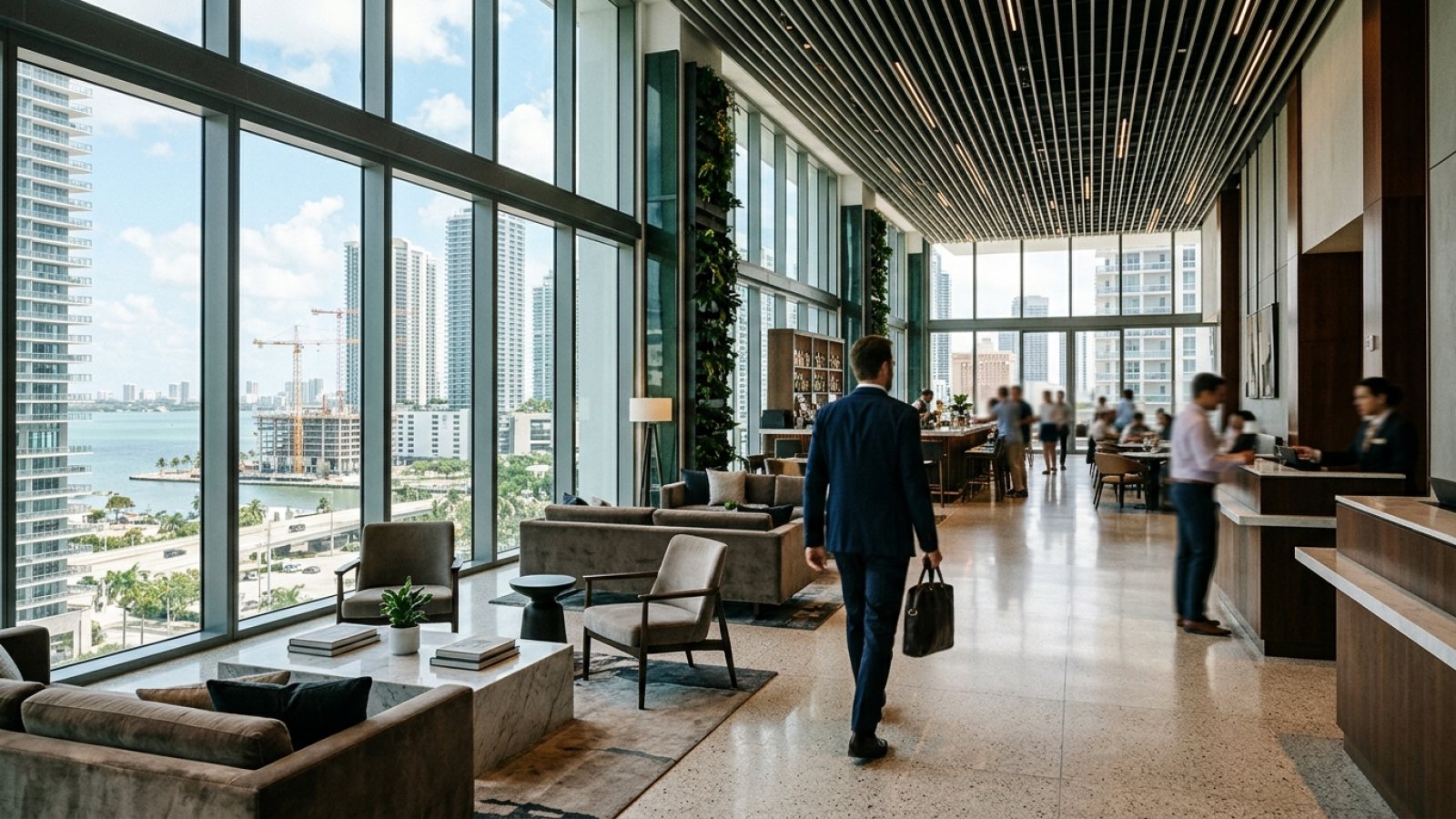
The current development cycle is notable not just for its volume, but for its geographical specificity and focus on the upper echelons of the market. Brickell, already a dense urban core, continues its vertical ascent with significant mixed-use projects incorporating luxury hotel components. Expect to see new flags or expanded offerings from global luxury brands attempting to capture the high-net-worth individual, the corporate executive, and the Latin American investor. The strategic gamble here is that Brickell's burgeoning financial district status can absorb this high-end supply, leveraging both traditional business travel and extended stays from individuals managing their Miami portfolios.
Edgewater, traditionally a residential neighborhood, is also seeing hotel flags integrated into its new luxury condominium towers, reflecting a trend towards amenity-rich, live-work-play environments. These often cater to a slightly different demographic—perhaps a longer-stay guest exploring relocation, or a second-homeowner testing the waters. Wynwood and the Design District continue their evolution, with boutique and lifestyle hotels anchoring their cultural and retail offerings, commanding strong ADRs from visitors seeking experiential stays aligned with the districts' unique brand identities. This targeted development indicates a market that, while growing, is also segmenting into highly specialized niches.
Occupancy Trends and the Evolving Guest Profile
Post-pandemic, Miami experienced an initial surge in occupancy and Average Daily Rate (ADR), driven largely by domestic leisure travelers seeking sun and open spaces. That initial wave has moderated, stabilizing into a more complex pattern. While baseline leisure demand remains robust, the market is increasingly influenced by corporate relocations and events. This translates to stronger mid-week occupancy in business-centric submarkets like Brickell and Doral, and a higher reliance on conventions, conferences, and signature events (e.g., Art Basel, Formula 1 Grand Prix) to drive peak periods across the broader market. Occupancy rates, while still healthy compared to national averages, are facing pressure from the increasing supply, leading to more aggressive pricing strategies outside of these peak demand windows.
The 'tourist' today is often an 'investor,' a 'relocating executive,' or a 'medical tourism patient.' Latin American capital continues to underpin a significant portion of luxury demand, not just in residential real estate but also in extended hotel stays for families managing their affairs or seeking high-end healthcare services. This segment values privacy, bespoke services, and proximity to financial centers or elite medical facilities, driving demand for larger suites and serviced apartments within hotel offerings. This isn't about a quick weekend getaway; it's about a temporary, high-value residency.
Beyond the Traditional: Diversifying Demand Drivers
The strategic imperative for Miami's hotel market is diversification of demand. Beyond the conventional leisure traveler, growth is being propelled by several key drivers. Corporate travel has rebounded significantly as companies like Citadel, Blackstone, and various tech firms establish or expand their Miami footprints. This brings consistent, albeit less flashy, demand for business-class accommodations. The city's burgeoning healthcare real estate sector also fuels hotel demand, with families accompanying patients for specialized treatments, particularly from Latin America, requiring convenient and comfortable long-term stays.
Furthermore, Miami's growing status as an international hub for arts, finance, and major sporting events means operators cannot afford to be reactive. Proactive engagement with event organizers, corporate travel managers, and even concierge services catering to ultra-high-net-worth individuals is crucial. The luxury retail experience in areas like the Design District also generates specific demand for nearby high-end hotel product, where proximity and brand alignment are critical. Success in this evolving landscape is less about capturing every booking, and more about understanding and catering to these distinct, often high-value, demand segments with tailored experiences and appropriate room products.
Miami's hotel market is not just expanding in square footage; it's expanding in complexity. For operators and investors, a granular understanding of submarket dynamics, a keen eye on evolving visitor demographics, and a commitment to diversified demand generation will be the hallmarks of resilient asset performance in the years to come. The era of passive reliance on sun and sand is over; strategic acumen is now the primary currency.
