
Miami's Industrial Real Estate Boom: E-Commerce, Logistics, and Last-Mile Delivery Dynamics
Miami's industrial real estate market is experiencing a profound re-rating, driven by global supply chain reconfigurations and relentless e-commerce demand. This transformation has elevated a once-pragmatic asset class into one of South Florida’s most competitive sectors, marked by record-low vacancies and soaring rental rates.
Miami's industrial real estate market isn't merely experiencing growth; it's undergoing a fundamental re-rating driven by global supply chain reconfigurations, persistent e-commerce demand, and its strategic position as a hemispheric trade hub. The relentless pursuit of efficient logistics has transformed what was once a pragmatic asset class into one of South Florida's most coveted and competitive sectors, evidenced by record-low vacancies and soaring rental rates across Miami-Dade.
The Port as a Catalyst for Logistics Core
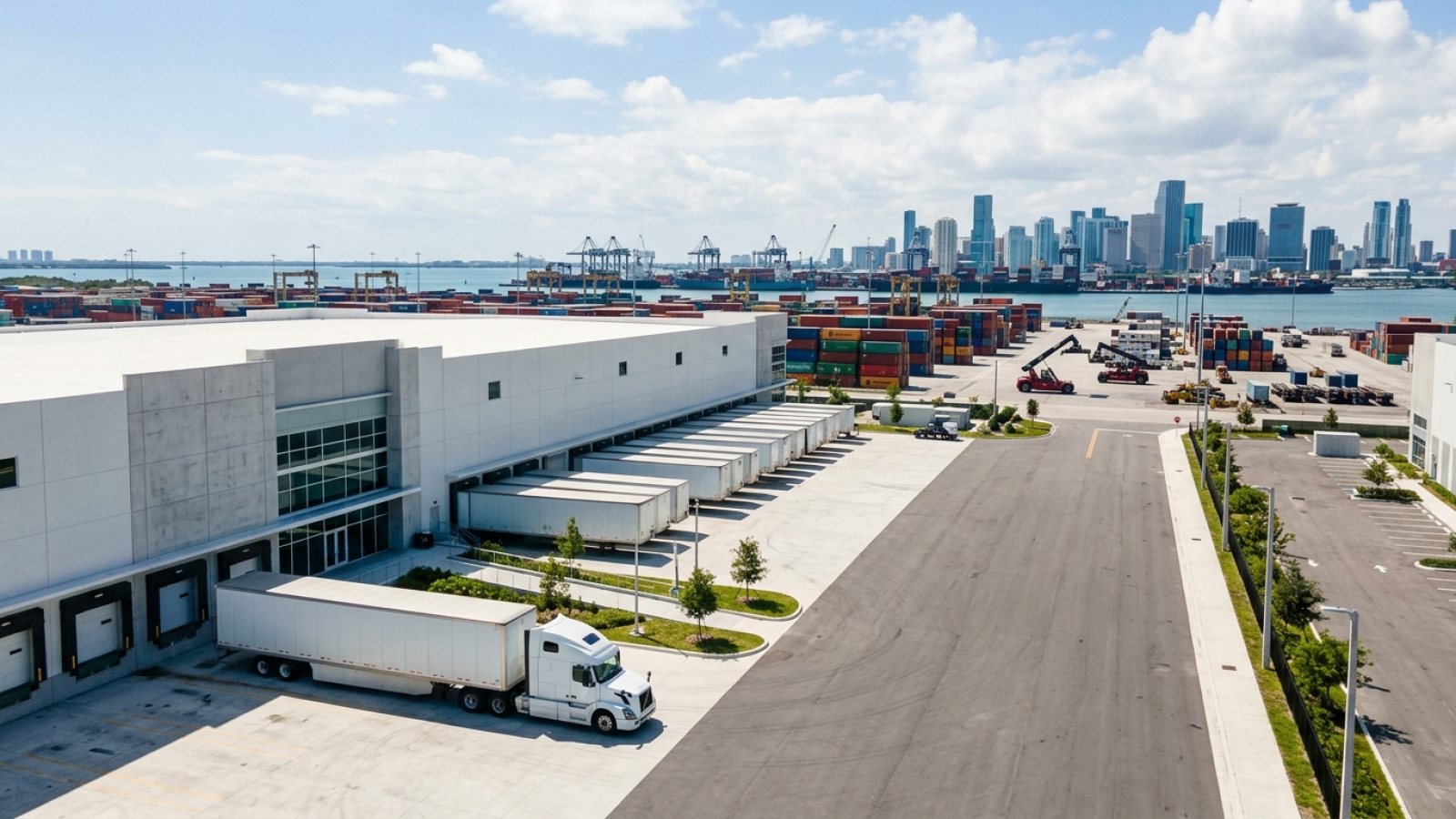
The PortMiami remains an undeniable linchpin in this boom. As one of the busiest cargo ports in the nation, handling millions of tons of cargo annually, its deep-water access and robust intermodal connections directly fuel demand for industrial space. Operators in the Medley, Airport West, and Doral submarkets, particularly, are benefiting from proximity to container yards and MIA, facilitating seamless cross-docking and distribution. We've seen a consistent uptick in tonnage, from time-sensitive perishable goods requiring advanced cold storage facilities—a growing niche given Miami’s role as a gateway for agricultural imports from Latin America—to high-value manufactured products, all demanding Class A warehouse space for immediate processing and onward distribution throughout Florida and into Latin America. This includes the surge in pharmaceutical distribution, leveraging Miami's healthcare real estate and research clusters. Latin American capital, already fluent in Miami’s commercial landscape, is increasingly active in financing and acquiring logistics assets, recognizing the long-term value in this critical infrastructure play.
The Last-Mile Squeeze and Land Scarcity
The intense focus on last-mile delivery has injected a new layer of complexity and competition into the industrial market. While large-scale distribution centers near the port are essential, the push for rapid fulfillment within urban centers has ignited demand for smaller, strategically located infill sites. Global players like Amazon and FedEx are driving significant activity, but so too are regional distributors and specialized service providers. Submarkets like Doral and even parts of Opa-locka, once primary distribution hubs, are now also contending with operators seeking 50,000 to 150,000 square foot facilities for quick turnaround, compressing the time from dock to customer doorstep. This granular demand is colliding head-on with Miami-Dade’s chronic land scarcity. Developable parcels are dwindling, driving land costs exponentially higher and pushing developers towards multi-story industrial solutions – a concept still nascent but increasingly discussed here – or further west into areas like Homestead, extending the last-mile radius and straining transport infrastructure. Consequently, Class A industrial rents, once comfortably in the low teens NNN just a few years ago, are now frequently commanding north of $18-$25 per square foot, with vacancy rates consistently hovering below 3% across the county, often dipping to sub-1% in prime locations.
Investment Dynamics and Future Headwinds
Institutional investors, private equity funds, and astute local players are aggressively chasing Miami industrial assets, pushing cap rates into the low 4s and even high 3s for prime, stabilized properties, indicative of intense competition for yield. This aggressive posture reflects a confidence in sustained demand, buttressed by Florida's robust population growth and Miami's unique trade position linking the Americas. The development pipeline, while robust with several million square feet under construction or planned, faces its own set of challenges: escalating construction costs, protracted permitting processes, and the aforementioned land prices. Furthermore, the broader economic context cannot be ignored. While demand for product is strong, the escalating cost of living in Miami-Dade poses a significant hurdle for attracting and retaining the logistics workforce, potentially increasing operational labor costs for operators. Infrastructure, particularly road networks designed for older traffic patterns, also strains under the increased freight volume. Finally, considering Miami’s geography, the long-term implications of climate change and sea-level rise are increasingly factored into due diligence for properties in low-lying industrial zones, adding a layer of risk assessment that is unique to coastal markets.
Miami's industrial real estate market is not slowing its ascent. The symbiotic relationship between global trade, e-commerce, and a geographically constrained yet strategically vital market ensures continued upward pressure on values and rents. Operators and investors must navigate the interplay of persistent demand, acute land scarcity, and a tightening labor market, but the underlying fundamentals suggest that quality logistics assets in Miami-Dade will remain a premium play for the foreseeable future. Strategic acquisitions and thoughtful development in this sector will continue to yield substantial returns for those who understand its unique dynamics.
