
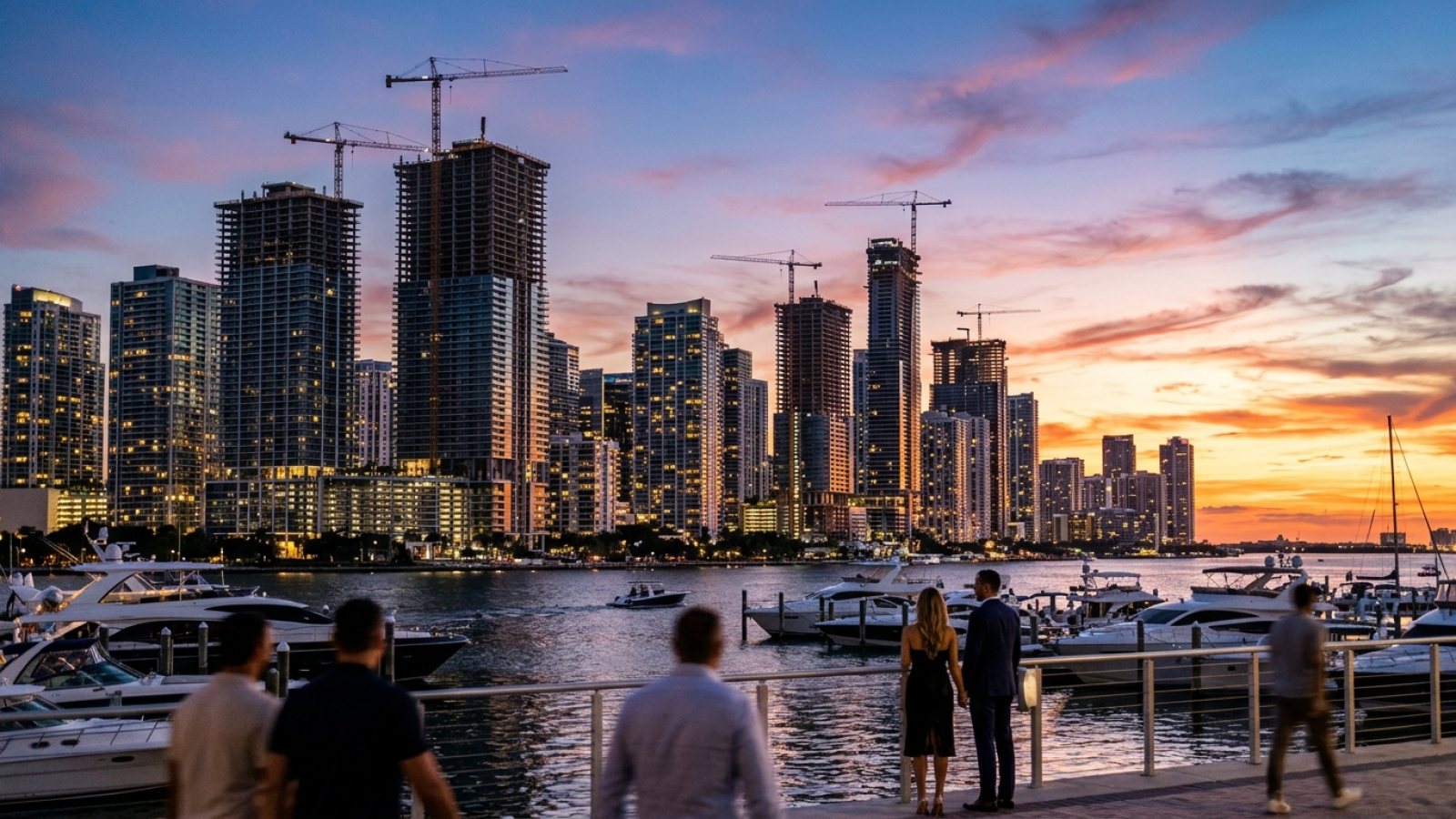
Miami's Ultra-Luxury Condo Boom: Developers, Debt, and the Global Capital Influx
Miami's residential skyline continues its vertical ascent, fueled by a unique confluence of sophisticated developers, calculated debt structures, and an insatiable demand from the global ultra-high-net-worth buyer. This current cycle is reshaping the city's economic and physical landscape.
Miami’s current ultra-luxury condominium boom is not merely a cyclical upturn; it is a structural reinforcement of the city’s status as a global wealth destination, driven by a complex interplay of sophisticated development strategies, disciplined financing, and an ever-deepening pool of discerning international and domestic capital. As of October 2026, new towers are redefining the skylines of Brickell, Edgewater, and even expanding into lesser-tapped beachfront parcels, consistently commanding price points north of $2,000 per square foot, with trophy units often exceeding $5,000 per square foot.
This wave is distinct from previous cycles, characterized by an unprecedented focus on bespoke amenities, privacy, and white-glove service that cater directly to the ultra-high-net-worth individual (UHNWI). Developers are not simply building residences; they are crafting curated ecosystems designed for a lifestyle of unparalleled convenience and exclusivity.
The Architects of Aspiration: Developers and Their Playbook
Leading this charge are established players like Vlad Doronin’s OKO Group, Swire Properties, Related Group, Terra Group, and Ugo Colombo’s CMC Group, among others, each bringing a nuanced approach to the market. Their playbook hinges on several key tenets. First, significant equity contributions are paramount, often requiring 50% or more in pre-sales and cash deposits to de-risk construction financing. This strategy minimizes speculative building, ensuring that each project has a substantial buyer base secured long before topping out. Second, the amenity arms race has intensified. We are seeing private marinas, exclusive members’ clubs, state-of-the-art wellness centers, and in-house concierge services that rival five-star hotels. This isn’t just about square footage; it’s about the quality and breadth of curated experiences. Finally, developers are strategically acquiring and holding prime land, understanding that scarcity in Miami’s core urban and waterfront areas will continue to drive value, even in an elevated interest rate environment.
Financing the Vertical Frontier: Debt Structures and Risk Mitigation
The debt landscape supporting Miami's ultra-luxury construction has matured significantly since the mid-2000s. While traditional banks remain cautious, often requiring substantial pre-sale thresholds and borrower equity, a robust ecosystem of private lenders, debt funds, and family offices has stepped in to bridge the gap. These alternative financing sources often offer greater flexibility but come with higher interest rates, typically ranging from 8% to 15% in today’s market, reflecting increased capital costs and perceived project risk. Developers are keenly aware of their debt service coverage ratios and are structuring deals with extended interest-only periods and strategic refinance points. The high-equity nature of these projects, combined with staggered deposit schedules from buyers, acts as a natural insulator against market volatility, making these ventures more palatable for lenders who prioritize capital preservation over aggressive leverage.
The Global Gold Rush: Understanding the Buyer Pool
The buyer profile for these luxury units is increasingly sophisticated and diverse. A significant portion continues to be domestic UHNWIs migrating from high-tax states like New York, California, and Illinois, drawn by Florida’s favorable tax regime, lifestyle, and burgeoning tech and finance sectors. These are not merely second homes; for many, they represent primary residences and a strategic repositioning of their wealth. Simultaneously, Latin American capital remains a crucial driver. Political and economic instability in countries like Argentina, Brazil, and Colombia continues to fuel a flight-to-safety mentality, with Miami real estate serving as a reliable hard asset for wealth preservation. European and Canadian buyers also feature prominently, increasingly viewing Miami as a stable, globally connected hub. These buyers are discerning, demanding transparency, robust building quality, and sophisticated design, often seeking larger floor plans and customization options that align with their international portfolios.
Market Dynamics and the Long Game
While the pace of new luxury inventory has been steady, absorption rates in key submarkets like Brickell and Edgewater remain healthy, primarily due to the disciplined pre-sale strategy and the sustained influx of wealth. However, the market is not without its challenges. Miami’s broader affordability crisis for its working population remains a stark contrast to this luxury segment, raising questions about infrastructure strain and long-term socio-economic balance. Climate resilience, particularly for waterfront developments, is also a non-negotiable consideration, with developers incorporating advanced mitigation strategies and higher elevation standards into their designs. Ultimately, the ultra-luxury condo market in Miami is less about speculative growth and more about solidifying the city's role as a primary global nexus for wealth, finance, and lifestyle. Investors and operators should recognize this as a foundational shift, not a temporary peak.
