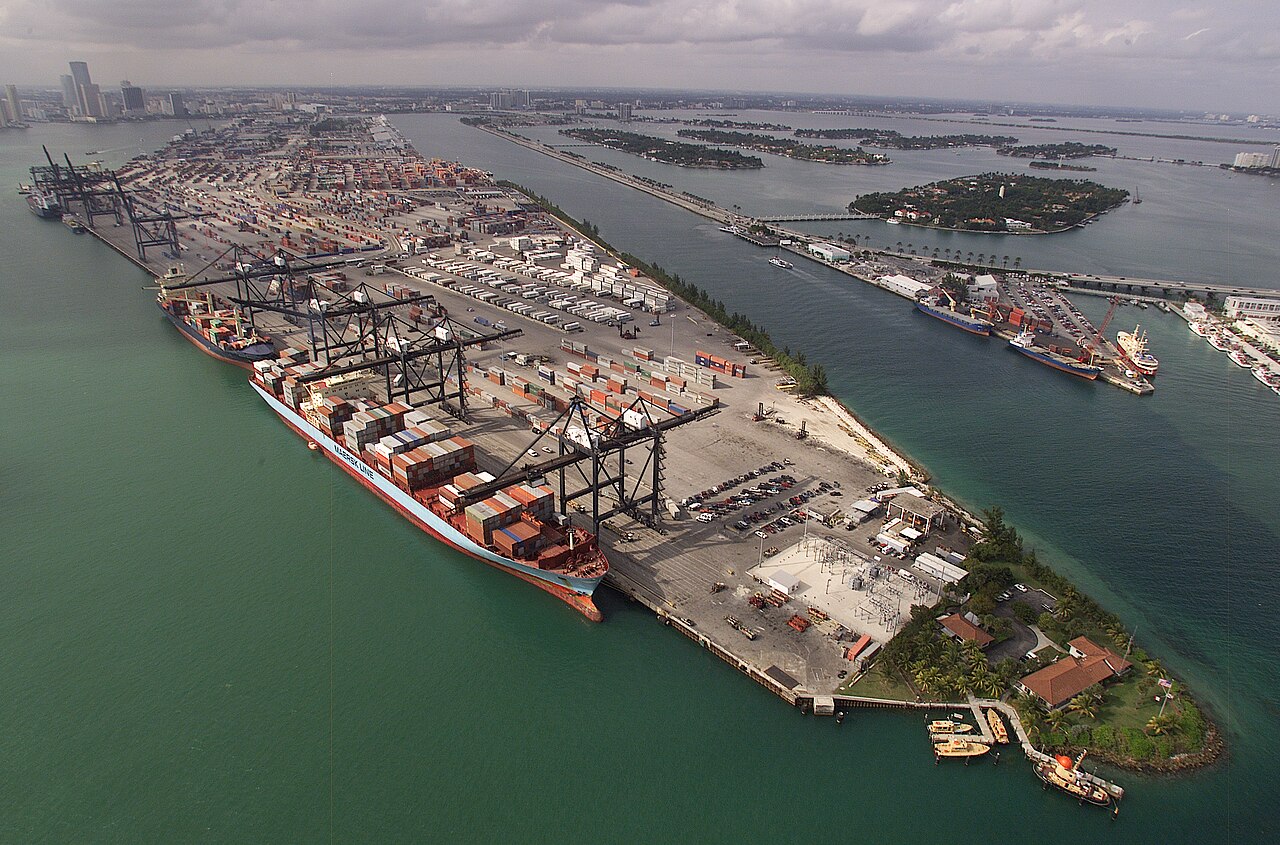
The migration of import operations to South Florida is not incidental; it is a calculated pivot, driven by Port Miami’s sustained investment in infrastructure and its unparalleled strategic position. Operators managing complex supply chains are increasingly leveraging Miami not merely as a point of entry, but as a critical hub for distribution across the Southeastern U.S. and, crucially, throughout Latin America.
This shift reflects more than just geographic convenience. It's about efficiency gains realized through direct vessel calls, expedited customs processes, and an expanding ecosystem of third-party logistics (3PL) providers and value-added services. The tangible outcome is a red-hot industrial real estate market across Miami-Dade, where vacancy rates remain stubbornly low and rental rates continue their upward trajectory.
New Panamax: The Operational Game Changer
The 2015 completion of the Deep Dredge project and the subsequent 2016 expansion of the Panama Canal fundamentally reshaped global shipping routes, directly benefiting Port Miami. With a deepened channel of 50/52 feet and the installation of Super Post-Panamax gantry cranes capable of handling vessels up to 22 containers wide, Miami is now equipped to accommodate New Panamax ships, which can carry over 14,000 TEUs. This capability translates into direct calls from major Asian and European ports that previously required transshipment, significantly reducing transit times and logistical complexities for importers.
For operators moving high-volume goods, this means fewer touchpoints, decreased risk of damage, and faster time-to-market. The operational metrics underscore this: Port Miami consistently reports year-over-year increases in TEU volume, demonstrating its growing role in the global supply chain. This is not just theoretical capacity; it is utilized capacity driving real demand for proximate warehousing and distribution facilities.
The Latin American Nexus and Re-Export Advantage
Miami’s established role as the financial and cultural gateway to Latin America extends profoundly into its logistics sector. Importers often leverage Port Miami not only for U.S. domestic consumption but also as a primary staging ground for re-export into Central and South America. The presence of Foreign Trade Zone (FTZ) #281 offers compelling incentives, allowing goods to enter the U.S. duty-free and without formal customs entry procedures until they leave the zone for domestic consumption. Critically, these goods can be processed, assembled, and repackaged within the FTZ for re-export, deferring or eliminating duties altogether, providing a substantial competitive advantage.
This re-export economy, often fueled by Latin American capital flowing into logistics infrastructure and operator businesses, has created a specialized demand. Companies are seeking industrial spaces that can accommodate light manufacturing, kitting, labeling, and other value-added services, often under the strict regulatory frameworks required for international distribution. This unique blend of import and re-export dynamics makes Miami distinct from other major U.S. port cities.
Industrial Real Estate Under Pressure
The sustained influx of import and re-export operations has placed immense pressure on Miami-Dade County’s industrial real estate market. Submarkets like Doral, Medley, Hialeah, and Opa-locka, offering prime access to Port Miami and critical highway infrastructure (SR 826, Florida Turnpike), have seen industrial vacancy rates consistently below 3.5% over the past several years, with Class A product often dipping under 2%. This scarcity drives up asking rents, which are now routinely observed in the $20-$28 per square foot (NNN) range for modern, high-clearance distribution facilities.
Developers are responding, but the challenges are significant: land scarcity, escalating construction costs, and the need for climate-resilient construction. We are seeing a push towards multi-story industrial projects in denser areas, a trend mirroring northern markets, reflecting the intense competition for prime logistics space. Lease terms are tightening, tenant improvement allowances are often reduced, and build-to-suit opportunities are increasingly competitive, signaling a landlord's market driven by fundamental demand rather than speculative froth.
Port Miami's strategic enhancements, coupled with Miami’s irreplaceable role in hemispheric trade, have created a compelling value proposition for importers. While challenges remain concerning infrastructure capacity, affordability for labor, and the ongoing need for climate adaptation, the port’s operational excellence and geographic centrality ensure its continued trajectory as a premier logistics gateway, solidifying South Florida's position as a crucial node in global supply chains.